Precision manufactured titanium materials certified to international standards with ultra-low magnetic susceptibility.

High strength alloy plates engineered for industrial tooling, structural fabrication, and non-magnetic components.
View Details →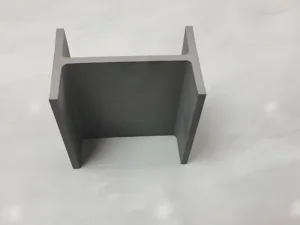
Structural custom profile shapes manufactured to exact dimensions for marine, aerospace, and high-strength frames.
View Details →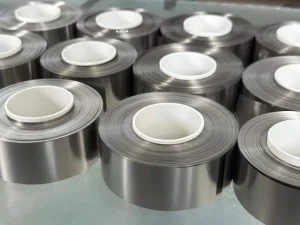
Custom width titanium foils featuring exceptional chemical stability for batteries, heat exchangers, and shielding.
View Details →
Commercially pure titanium sheets featuring optimal ductility, weldability, and low magnetic interference.
View Details →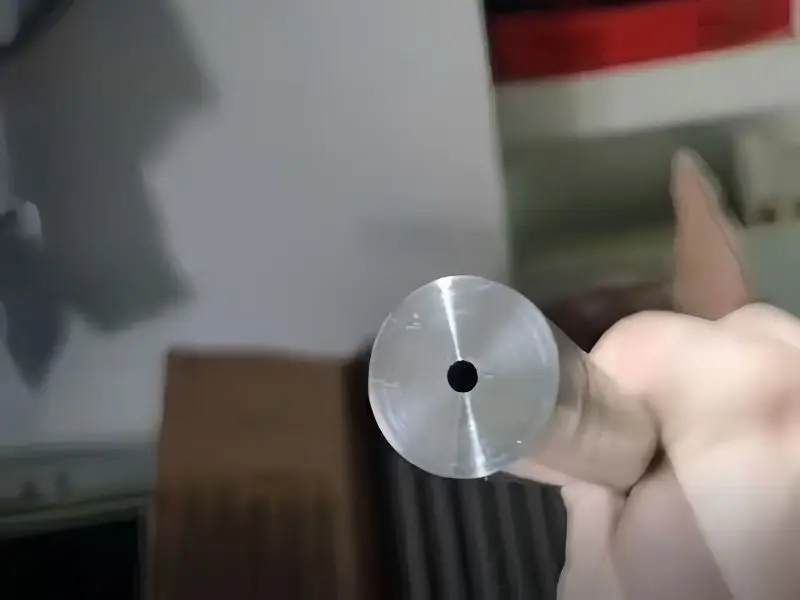
Hollow round bars engineered for medical surgical devices, intramedullary nails, and downhole logging instruments.
View Details →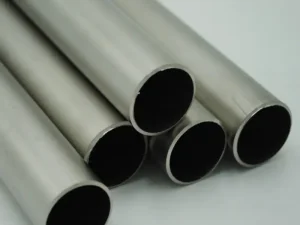
High-pressure seamless piping systems for aggressive chemical processing and subsea heat exchange equipment.
View Details →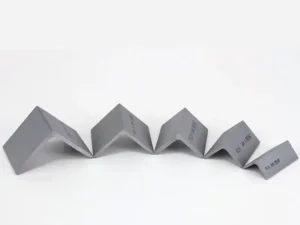
Tailor-made finished titanium hardware designed to meet your specific geometry and tolerance criteria.
View Details →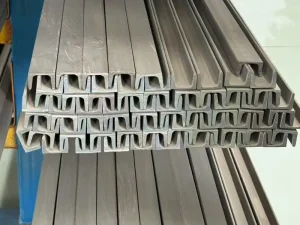
Corrosion-resistant structural channels optimized for offshore construction and demanding framework designs.
View Details →An authoritative guide to magnetic permeability control and metallurgical standards in titanium alloy production.
Titanium is naturally classified as a paramagnetic material. This means it exhibits a very weak positive susceptibility to magnetic fields, with a relative magnetic permeability ($\mu_r$) extremely close to 1.00005. Unlike ferromagnetic metals (such as iron, nickel, and cobalt), titanium does not retain permanent magnetization when the external magnetic field is removed. This fundamental property makes titanium bars an irreplaceable resource in applications where magnetic interference would compromise structural integrity, measurement precision, or safety.
However, "commercial" titanium products are not automatically "non-magnetic" in high-precision scenarios. The presence of trace elements—particularly Iron (Fe), Nickel (Ni), and Chromium (Cr)—can significantly alter the magnetic signature of the final component. If trace iron levels are not strictly controlled during the melting stage, the iron atoms can aggregate or form ferromagnetic second-phase precipitates. This introduces localized magnetic distortions, rendering standard titanium bars unusable in ultra-sensitive diagnostic devices (like MRI scanners) or geomagnetically aligned measurement equipment.
E-E-A-T Technical Guideline: True non-magnetic performance requires a meticulous melting process. By using double or triple Vacuum Arc Remelting (VAR) or Electron Beam Cold Hearth Melting (EBCHM), we suppress the concentration of interstitial iron impurities to levels far below the thresholds permitted by standard ASTM B348 specifications.
The manufacture of high-end non-magnetic titanium bars requires a deep understanding of phase transformations and precipitation kinetics. In alpha-beta titanium alloys like Grade 5 (Ti-6Al-4V), iron is classified as a strong beta-stabilizer. During slow cooling, segregation can occur, concentrating iron inside the beta phase. Under specific conditions, this segregation can create micro-regions with anomalous magnetic properties. To counteract this effect, our manufacturing facility implements controlled thermal cycles, rapid quenching, and subsequent stabilization annealing. This ensures that the alloying element iron remains in solid solution within the matrix, suppressing any potential ferromagnetic behavior.
| Grade | Standard Specs | Permeability ($\mu_r$) | Fe Max WT % | Primary Application Profile |
|---|---|---|---|---|
| GR1 / GR2 (Pure) | ASTM B348 / ASME SB348 | < 1.00005 | 0.20% / 0.30% | Chemical Processing, Marine, MRI Equipment Structurals |
| GR5 (Ti-6Al-4V) | ASTM B348 / ASTM F136 | < 1.00020 | 0.40% (Medical < 0.25%) | Aerospace Structurals, Downhole MWD/LWD Drilling Tools |
| GR7 (Ti-0.2Pd) | ASTM B348 | < 1.00008 | 0.30% | Highly Acidic Chemical Reactors, Marine Sensors |
| GR9 (Ti-3Al-2.5V) | ASTM B348 / ASTM B861 | < 1.00010 | 0.25% | Hydraulic Tubing, Aerospace High-Pressure Conduit Systems |
| GR12 (Ti-Mo-Ni) | ASTM B348 | < 1.00030 | 0.30% | Desalination Plants, High-Temperature Heat Exchangers |
A macro-analysis of the global demand, supply chain dynamics, and regulatory landscapes governing titanium alloys.
Global sourcing of high-grade titanium sponge relies heavily on key primary producers in China, Japan, Kazakhstan, and the United States. High-purity, non-magnetic titanium bars represent a specialized segment where raw material inputs must be meticulously segregated from steel scrap contamination in the smelting yard to prevent magnetic cross-contamination.
Compliance with ASTM, ISO, aerospace AMS, and medical implant specifications (such as ASTM F136 or ISO 5832-3) is critical. Suppliers must provide complete chemical and physical test reports, including micrographic analysis for iron segregation and magnetic permeability measurements using calibrated low-mu permeability indicators.
The growth of high-field MRI systems (3.0 Tesla and 7.0 Tesla) and ultra-sensitive oceanographic surveillance networks has increased demand for zero-magnetic materials. Designers are replacing older, heavier non-magnetic copper-beryllium alloys with high-strength, lightweight non-magnetic titanium alloys.
To support high-tech industries transitioning to high-precision instrumentation, we offer system-level solutions built around specialized manufacturing, surface treatment, and impurity management processes.
In deep-sea exploration, research vessels, and mine countermeasure operations, maintaining a zero magnetic signature is essential. Components manufactured from titanium alloys allow acoustic arrays, magnetometer systems, and naval mine sweeping machinery to operate without creating magnetic field distortions. Additionally, titanium's outstanding resistance to seawater corrosion eliminates the need for expensive cathodic protection systems or marine coatings, significantly lowering lifetime operating costs.
Magnetic Resonance Imaging (MRI) machines generate exceptionally strong magnetic fields. Any surgical instrument, implant, or internal structural frame component containing minor ferromagnetic impurities will experience torque, heat up, and distort the diagnostic image. Our non-magnetic titanium rods undergo strict non-destructive eddy current testing and magnetic scanning to guarantee absolute compatibility in direct-patient and high-field diagnostic environments.
Modern directional drilling relies heavily on Measurement-While-Drilling (MWD) and Logging-While-Drilling (LWD) tools to guide drill bits along exact coordinates using geomagnetic sensors. Standard steel drill collars create magnetic interference that distorts these sensors. Heavy-duty titanium non-magnetic bars provide the necessary mechanical yield strength (exceeding 850 MPa when processed as high-strength Grade 5) while remaining completely transparent to magnetic sensor arrays.
The industry is moving toward additive manufacturing (3D printing) of titanium parts and the development of ultra-clean smelting technologies. Our research focuses on minimizing iron pickup during recycling loops and developing high-entropy titanium alloys that remain stable down to cryogenic temperatures. This ensures our materials can meet the performance requirements of next-generation fusion reactors and quantum computing hardware.
A premier manufacturer and strategic supplier of pure and alloy titanium materials.
Founded in 2001, ProX Metal is a high-tech enterprise specializing in the development, production, and servicing of pure and alloy titanium materials. As a leading manufacturer of raw titanium materials, we focus on providing cost-effective, stable, high-end titanium materials applied in chemical, oil and gas, marine, and electronics fields. We are ISO 9001:2015 certified and hold 14 national patents.
ProX Metal possesses a complete titanium metal production chain, equipped with over 100 advanced machines, achieving an annual output of 8,000 tons of pure titanium and alloy materials. We offer comprehensive solutions spanning from standard products to customized offerings, committed to delivering the highest quality service to our customers.
Our quality management system meets the stringent excellence standards for titanium raw material production. This ensures that our products meet the highest safety and quality standards. Our 15-year experienced R&D team can assist you with your custom project.

Technical parameters for titanium sheets, bars, and tubing manufactured to international standards.
Grades: GR1, GR2, GR7, GR12, Ti6Al4V, Ti6Al4V ELI, GR5, GR23, Ti-5Al-2.5Sn
Standards: ASTM B265
Thicknesses: 0.3mm to 100mm
Finishes: Cold-rolled bright, acid-washed, pickled, sandblasted, black oxide-covered
Grades: GR1, GR2, GR3, GR4, GR5 (Ti6Al4V), GR5 ELI, GR7 (Ti-0.2Pd), GR9 (Ti-3Al-2.5V), GR12 (Ti-Mo-Ni)
Standards: ASTM B348
Dimensions: Diameter 5mm - 100mm, Length 1500mm - 3000mm
Profiles: Round, Square, Hexagonal (H2.5 - H14)
Grades: GR1, GR2, GR5, GR7, GR9, GR12
Standards: ASTM B338, ASTM B861, ASTM B862, ASTM B337
Capillary Sizes: Outer diameter 0.5 - 6mm, Wall thickness 0.1 - 1.2mm
Standard Tubing: Diameter 3 - 200mm, Length 500 - 6000mm
Where our premium non-magnetic and corrosion-resistant titanium products provide critical performance.

Widely used against highly corrosive media such as chlor-alkali and sulphuric acid. It ensures the efficient and safe operation of chemical production, prevents material leakage, and guarantees product quality.

Supplies high-strength, corrosion-resistant titanium alloys for downhole exploration, drilling, logging equipment, and offshore oil and gas refining platforms.

Outstanding resistance to seawater and marine atmospheres makes titanium the material of choice for marine piping, propulsion shafts, and hull components.
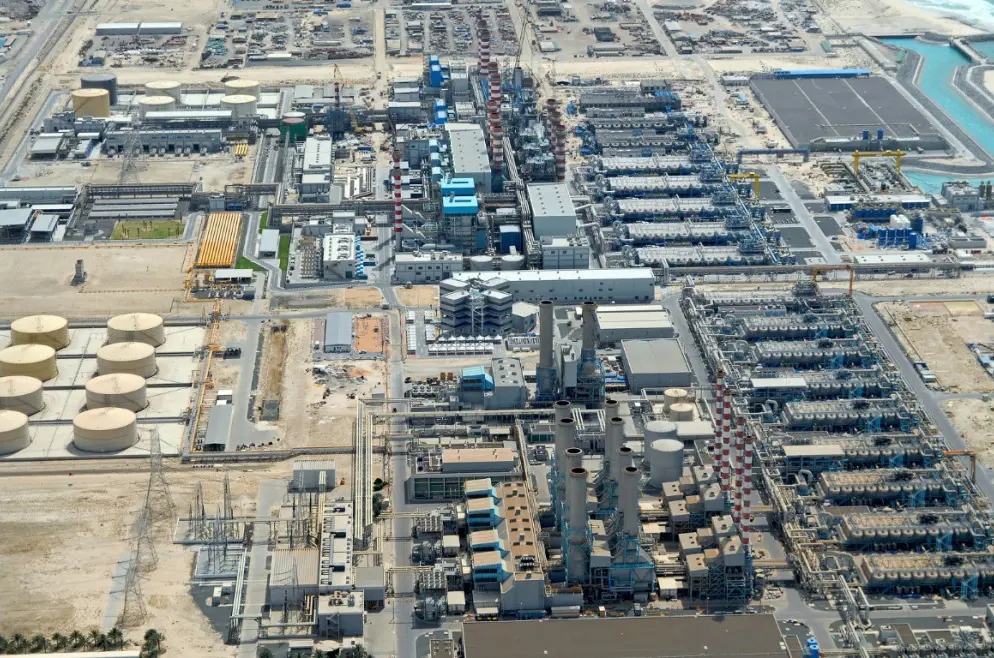
Titanium can improve the efficiency and extend the life of desalination equipment due to its corrosion resistance, high strength, light weight, and good thermal conductivity.
Read what our long-term industrial partners and global distributors say about our material quality and technical support.
Customer From South Korea: "They provided a prompt update on arranging the shipment. We are very grateful that they were able to solve the problem quickly after sales, and we are confident that we will continue our collaboration for a long time."
Customer From UK: "We've been working with this supplier for 10 years, and we can't speak highly enough of them. The quality of their titanium sheets and strips is always consistent, and they always meet our production needs."
Customer From Turkey: "Their logistics are super fast, so they can deliver on time even for big orders. This helps us avoid production delays, which is a huge help to our factory schedule."
Customer From Mexico: "Their comprehensive inventory meets our diverse material grade requirements, making them highly accommodating for distributors like us. They provide an efficient and patient service for sample orders."
Stay updated on industry insights, processing techniques, and materials engineering news.
2026-04-16
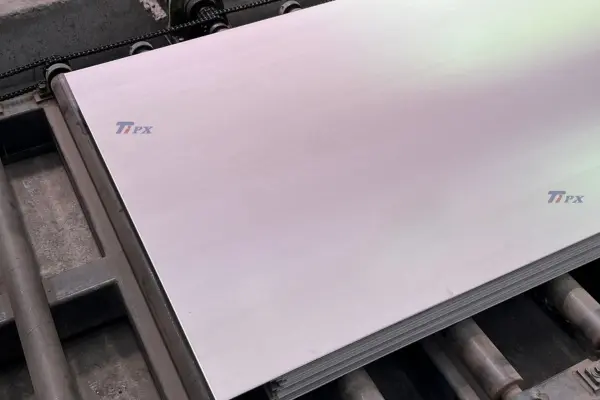
An in-depth analysis of chemical resistance limits, fluid dynamics, and pressure vessel engineering considerations using pure titanium grades.
2026-04-16
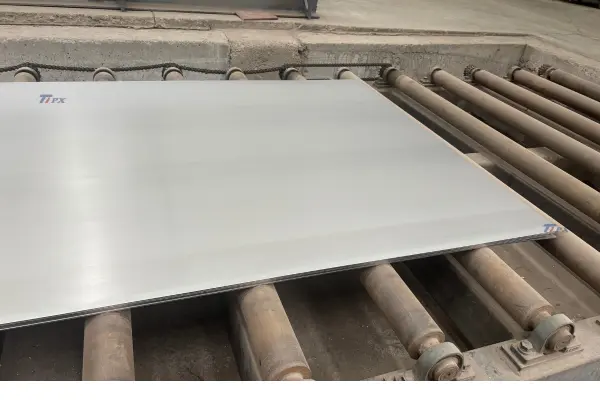
Evaluating high-temperature oxidation thresholds and galvanic corrosion prevention in commercial titanium reactor vessel linings.
2026-04-15
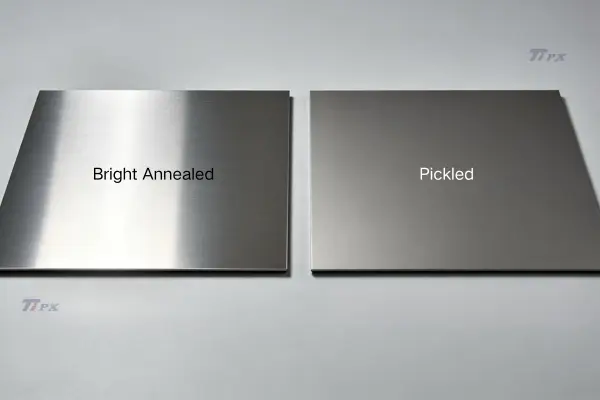
Comparing surface roughness, passivation layer chemistry, and cost factors between acid-pickled and hydrogen-annealed titanium sheets.
Expert metallurgical answers about purchasing, testing, and machining non-magnetic titanium bars.
The magnetic permeability of titanium is primarily determined by its chemical composition. Pure titanium has a naturally low magnetic susceptibility, but trace impurities of iron (Fe), nickel (Ni), and chromium (Cr) can increase its magnetism. If iron content is not strictly controlled during the melting process, it can form ferromagnetic particles within the titanium matrix. Controlling this trace iron content is key to keeping the relative magnetic permeability ($\mu_r$) extremely close to 1.0000.
ASTM B348 defines the standard specifications for titanium and titanium alloy bars, setting maximum iron content limits (e.g., 0.30% Fe for Grade 2 and 0.40% Fe for Grade 5). While these limits are fine for general structural applications, they may not be strict enough for specialized non-magnetic applications like MRI components or precision instrumentation. For these uses, suppliers must control iron levels to much tighter limits (often below 0.15% or 0.10%) to prevent localized magnetic distortions.
Yes. Machining and welding can introduce magnetic contamination if not properly managed. During machining, using steel cutting tools can transfer microscopic iron particles to the surface of the titanium bar, creating localized magnetic spots. During welding, exposure to air at high temperatures can cause interstitial contamination. To prevent this, fabricators should use dedicated carbide tooling, perform thorough post-machining chemical cleaning (such as nitric acid passivation), and ensure complete inert gas shielding during welding.
We certify non-magnetic performance by testing representatives from each batch using a calibrated low-mu permeability meter. This test measures the magnetic permeability relative to air. The results, along with chemical analysis reports showing precise trace element concentrations (especially Fe), are documented in the Material Test Report (MTR) provided with each shipment.
Grade 2 is Commercially Pure (CP) titanium, offering excellent corrosion resistance, ductility, and formability, with a yield strength of about 275 to 450 MPa. It has lower trace element limits, making it naturally easier to maintain at a very low magnetic permeability. Grade 5 (Ti-6Al-4V) is an alpha-beta alloy with significantly higher yield strength (exceeding 828 MPa) and tensile strength, making it ideal for high-stress applications like aerospace fasteners or downhole drilling collars. However, because it contains more alloying elements, Grade 5 requires stricter processing control to guarantee a low magnetic profile.
Need material test reports, specific sizing, custom profiles, or volume pricing? Contact our engineers today for a prompt response within 24 hours.
Request Professional QuoteExplore our complete range of standard titanium rods, foils, and specialized titanium alloys.
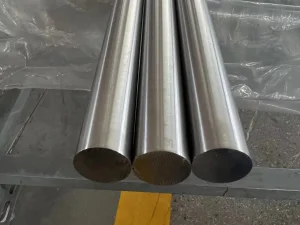
Heavy-duty aerospace-grade rods designed to withstand mechanical stress and extreme operating temperatures.
View Details →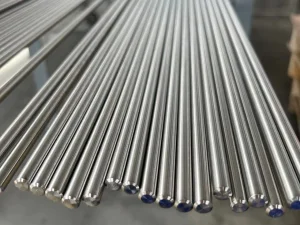
Highly passivated pure titanium rounds optimized for electroplating racks and chemical stirring shafts.
View Details →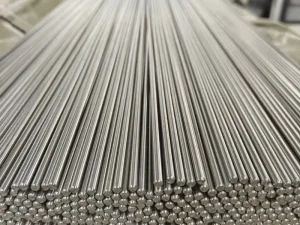
Medium-strength structural rods featuring exceptional weldability and excellent cold-forming capabilities.
View Details →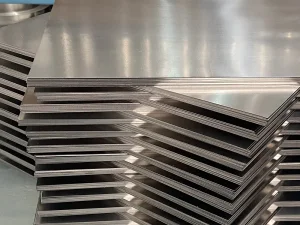
High-strength ultra-thin titanium alloy foils engineered for diaphragm structures and acoustic panels.
View Details →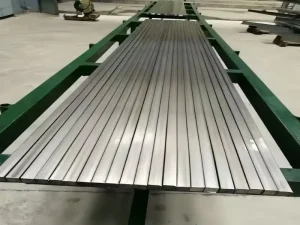
Precision-rolled coil strips supplied in custom dimensions for stamping and component forming.
View Details →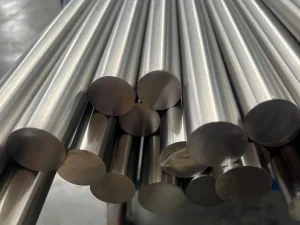
Specialized molybdenum-nickel alloyed bars offering high crevice corrosion resistance at elevated temperatures.
View Details →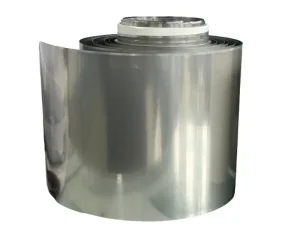
Ultra-thin gauge foil manufactured for high-reliability electronics, medical packaging, and aerospace shielding.
View Details →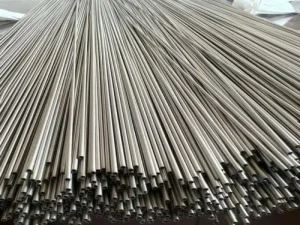
Micro-bore seamless tubing designed for medical fluid delivery, chromatography, and precision instruments.
View Details → ProX Metal