Explore our foundational range of titanium pipes, billets, forgings, and alloy profiles tailored for harsh marine and chemical processing environments.
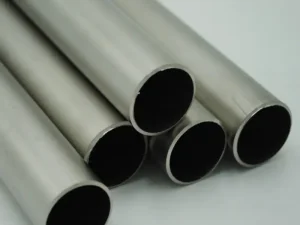
Precision-drawn, corrosion-resistant seamless titanium tubes optimized for heat exchangers and demanding offshore petrochemical systems.
Learn Technical Details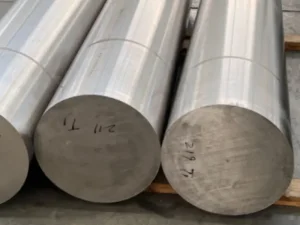
Premium forging-grade raw billets designed for custom machining, heavy industry components, and high-tensile structural forgings.
Learn Technical Details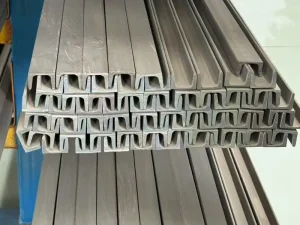
Custom structural extrusion shapes and U-channels offering exceptional strength-to-weight ratio for architectural and aerospace applications.
Learn Technical Details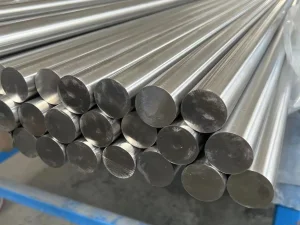
ASME SB348 compliant Grade 7 palladium-alloyed rods built for aggressive acid-reducing conditions in chemical factories.
Learn Technical Details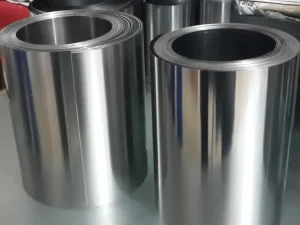
Ultra-thin micro-foil materials engineered for electrochemical electrolyzer stacks, lithium batteries, and sensory diaphragms.
Learn Technical Details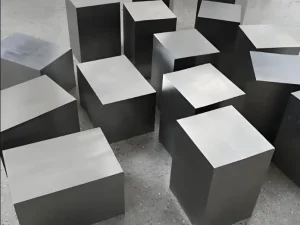
High-integrity forged rings, discs, and flanges conforming to ASTM B381, built to resist extreme subterranean ocean pressures.
Learn Technical Details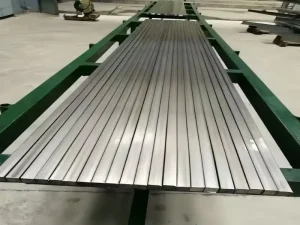
Narrow cold-rolled titanium strips with high precision dimensional tolerances, optimal for plate heat exchanger manufacturing.
Learn Technical Details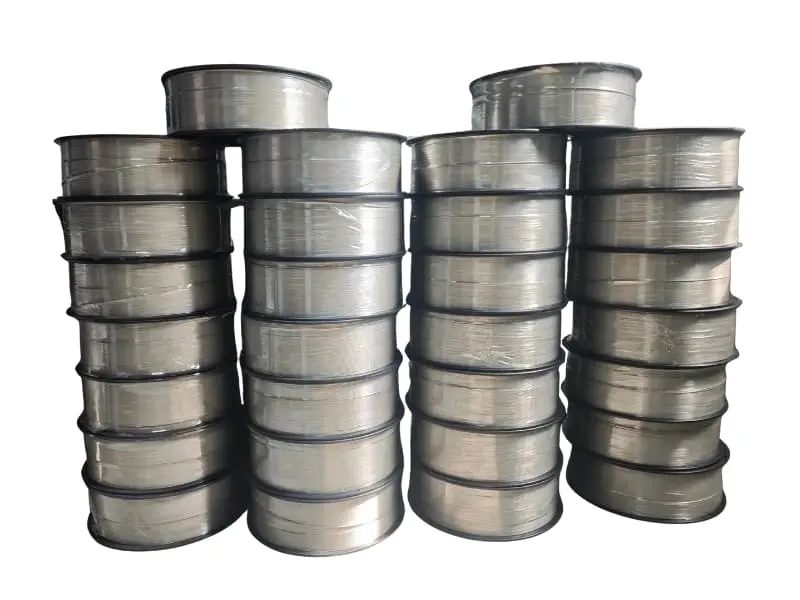
High-purity welding spool and cut-length wires conforming to AWS A5.16, guaranteeing defect-free weld joints in pressure vessels.
Learn Technical DetailsThe global demand for high-performance corrosion-resistant metals is undergoing a structural transition. Industrial titanium plates have moved from a specialized aerospace material to the bedrock of modern process engineering. Industries such as chemical manufacturing, offshore oil and gas extraction, municipal desalination, and industrial power generation increasingly require materials capable of surviving high-temperature chlorination, sulfuric concentrations, and high-salinity sea environments.
Historically, pure titanium sourcing was constrained by complex refinement methods like the Kroll Process. However, integrated manufacturing techniques implemented by advanced facilities in China and globally have optimized economies of scale. Currently, global titanium supply chains prioritize consistent chemical purity, ASTM/ASME standards compliance, and localized inventory networks. For procurement departments, securing reliable mill pipelines with comprehensive raw material tracing is critical to avoiding delays and ensuring mechanical safety.
Traditional nickel alloys and super-duplex stainless steels are hitting their limits in high-temperature, highly acidic media. As industrial processes operate at higher pressures to increase efficiency, Gr 2 pure titanium and Gr 7/Gr 12 alloyed plates provide long-term corrosion resistance, resulting in lower life-cycle costs and reduced downtime.
Understanding the metallurgy of industrial titanium plates requires analyzing crystal structures and their corresponding behaviors. Unalloyed Commercially Pure (CP) titanium (Grades 1 through 4) exists in a stable hexagonal close-packed (HCP) alpha phase at room temperature. The subtle inclusion of interstitial elements—specifically oxygen, nitrogen, carbon, hydrogen, and iron—determines the yield strength and formability limits of the plate.
Alloyed grades modify this alpha lattice. For example, Grade 5 (Ti-6Al-4V) introduces aluminum as an alpha stabilizer and vanadium as a beta stabilizer, creating a dual-phase alpha-beta micro-structure. This formulation offers high tensile strength (minimum 825 MPa), making it suitable for high-stress structural and offshore components. In contrast, Grade 7 introduces 0.2% palladium, which enhances resistance to localized crevice corrosion in acidic conditions. Grade 12 (Ti-0.3Mo-0.8Ni) utilizes molybdenum and nickel to improve strength and corrosion resistance at a lower cost than palladium alloys.
| Titanium Grade | Lattice Phase Type | Yield Strength (MPa) | Tensile Strength (MPa) | Elongation Min (%) | Key Industrial Applications |
|---|---|---|---|---|---|
| Grade 1 (CP) | Alpha (High Formability) | 170 - 310 | 240 Min | 24% | Deep drawing, plate heat exchangers, explosive cladding |
| Grade 2 (CP) | Alpha (Standard) | 275 - 450 | 345 Min | 20% | Chemical reactors, flue-gas desulfurization (FGD), piping systems |
| Grade 5 (Ti-6Al-4V) | Alpha-Beta (High Strength) | 828 Min | 895 Min | 10% | Aerospace structures, marine risers, downhole oil drilling tools |
| Grade 7 (Ti-0.2Pd) | Alpha (Palladium Modified) | 275 Min | 345 Min | 20% | Highly aggressive chemical process vessels, chlorine plants |
| Grade 12 (Ti-Mo-Ni) | Near Alpha (High Temp) | 345 Min | 485 Min | 18% | Elevated temperature chemical processing, shell & tube heat exchangers |
Detailed breakdown of our core titanium flat rolled products, rods, and tubes. Built in strict accordance with international standards.
The manufacturing of titanium plates starts with vacuum arc remelting (VAR) or electron beam cold hearth melting (EB) to produce defect-free titanium ingots. Next, hot rolling breaks down the ingot structure at temperatures above the recrystallization threshold. Cold rolling is then used to achieve final thickness tolerances and improve surface quality.
Cold-rolled plates must undergo critical heat treatments. Recrystallization annealing relieves internal residual stresses and restores ductility. The final step is surface conditioning. Acid pickling with a nitric-hydrofluoric acid bath removes surface oxides and alpha case layers. Vacuum bright annealing (BA) provides a clean metallic finish without the need for pickling, which is ideal for delicate chemical applications.
When designing process equipment, engineers evaluate properties like density, thermal conductivity, and coefficient of thermal expansion. Titanium's density (4.51 g/cm³) is roughly half that of nickel-based superalloys (such as Hastelloy C276 or Inconel 625) and stainless steels. This high strength-to-weight ratio allows for thinner container walls and lighter support structures.
Additionally, titanium has a low thermal expansion coefficient (8.6 x 10⁻⁶/K at 20-100°C), which reduces thermal fatigue in cyclically heated systems. Its high thermal conductivity compared to stainless steel also improves heat transfer efficiency in condenser and evaporator units.
Our custom titanium plates are engineered for demanding environments, providing reliable service life where standard metals fail.
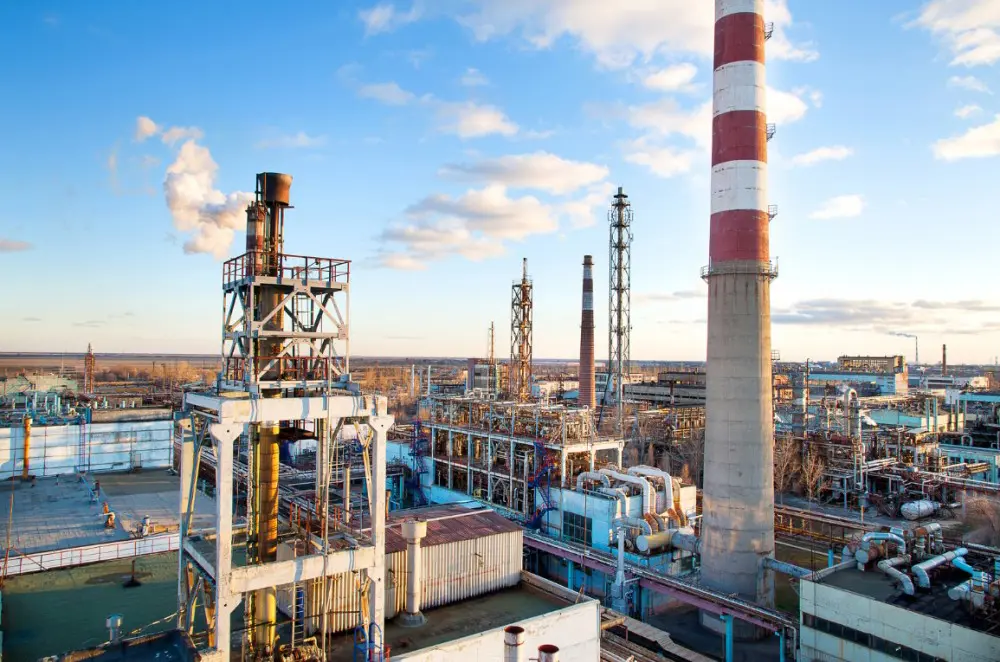
Resists corrosive media including chlor-alkali, sulfuric acid, and wet chlorine. Used in reactors and flue-gas desulfurization (FGD) systems.
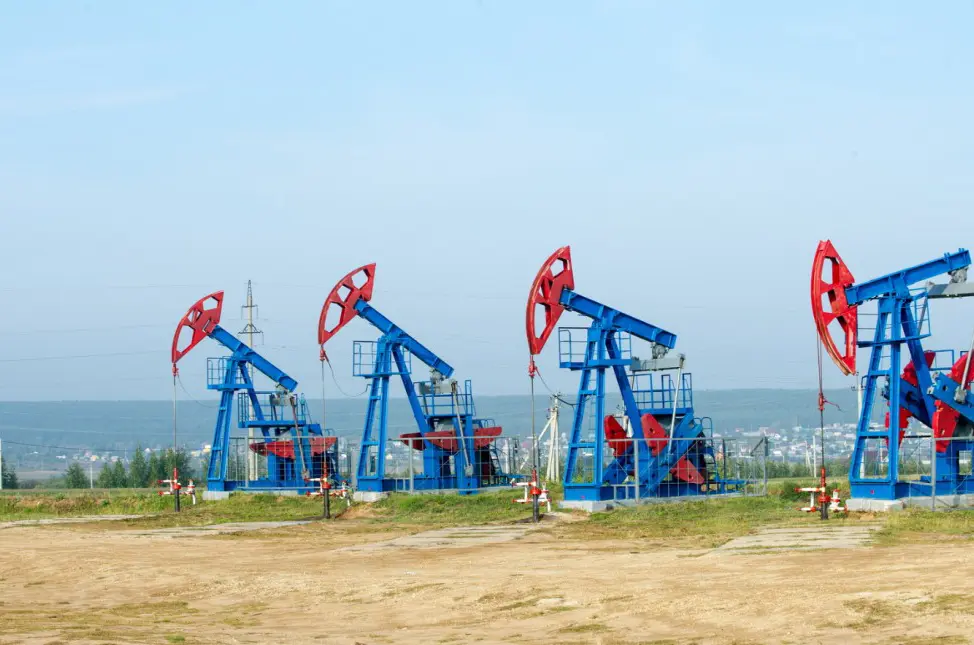
High strength-to-weight ratio and resistance to sour gas (H2S, CO2) and high chlorides, ideal for deepwater offshore applications.

Provides corrosion resistance in seawater applications, making it suitable for propellers, shafts, heat exchangers, and ball valves.
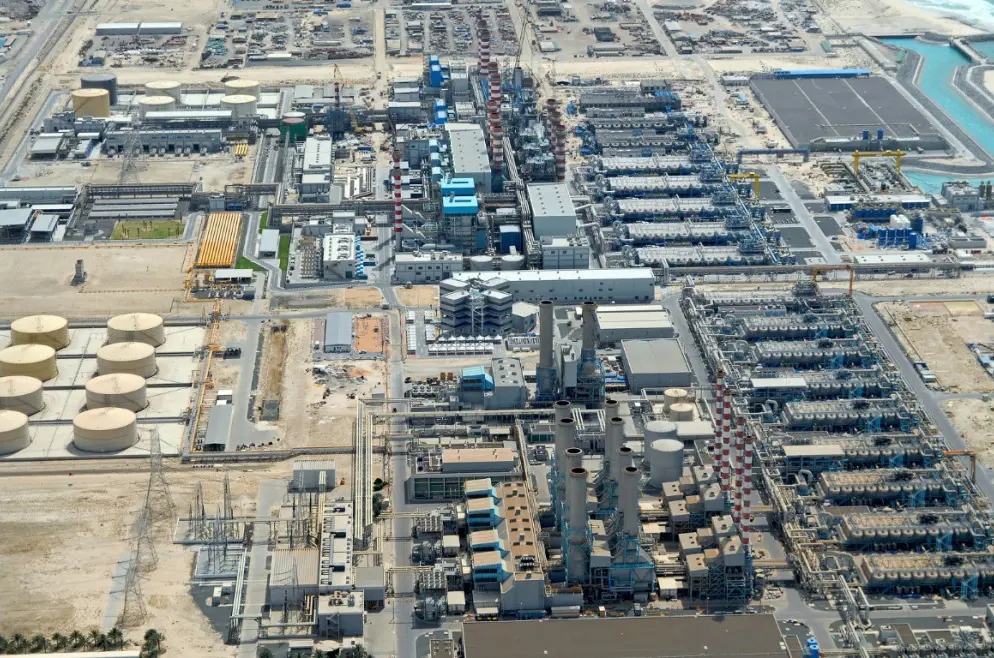
Resists impingement and erosion-corrosion in high-velocity brine solutions, extending the operational life of thermal desalination equipment.
Ensuring high reliability in industrial processing requires strict quality control. All titanium plates must be fully traceable back to the master ingot heat number. Under ISO 9001:2015 and international standards, our testing protocol includes:
The titanium industry is advancing through powder metallurgy and additive manufacturing (3D printing) for complex structural components. In plate production, modern developments focus on refining grain structures during the rolling process to improve fatigue life and tensile properties without relying on high-cost alloying elements. Additionally, hydrogen annealing technologies are being used to optimize microstructure stability in high-temperature environments.
Read experiences from engineering firms and procurement teams who have integrated our industrial titanium plates into their process designs.
Detailed answers to key engineering and metallurgical questions regarding ASTM B265 specifications and application performance.
Explore our high-performance foil, strip, plate, and rod offerings engineered for electrochemical, structural, and heat exchanger systems.
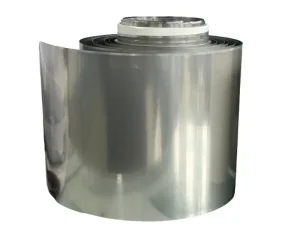
Ultra-thin cold-rolled titanium foil (0.005mm to 0.10mm) for aerospace acoustic barriers, battery shielding, and specialized sensor diaphragms.
Learn Technical Details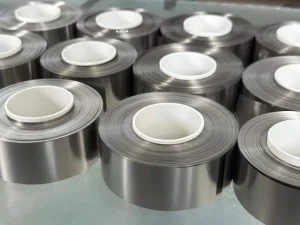
Slit-to-width titanium strips in Grade 1 and Grade 2, engineered for stamping plate heat exchanger gaskets and plate components.
Learn Technical Details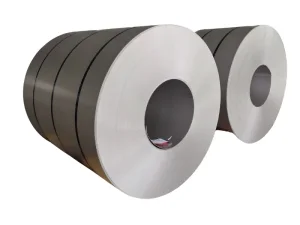
Large-format continuous rolled coils for processing lines, storage tank construction, and high-volume press fabrication.
Learn Technical Details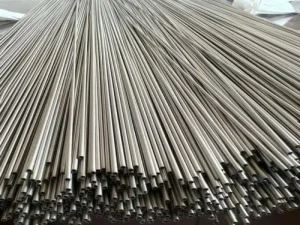
Micro-bore seamless tubes for medical devices, chromatography instruments, and precision aerospace pressure transmitters.
Learn Technical Details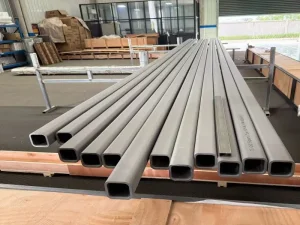
Structural profile tubing designed for subsea frame assemblies, lightweight marine structures, and defense applications.
Learn Technical Details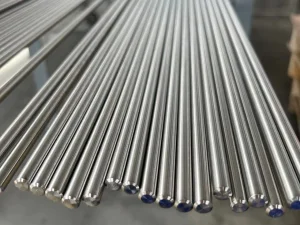
Chemically pure round bars tailored for chemical tank support struts, stirring shafts, and electroplating anodes.
Learn Technical Details
Specialty alpha-alloy plates offering high weldability and stability at cryogenic and elevated temperatures.
Learn Technical Details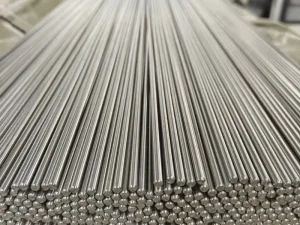
Medium-strength Ti-3Al-2.5V structural alloy rods, offering high cold formability and fatigue resistance for hydraulic systems.
Learn Technical DetailsRequest mill test reports (MTR), chemical composition sheets, or custom sizing quotes. Our engineering team will review your specifications and respond within 24 hours.
Contact Titanium Engineering Team ProX Metal