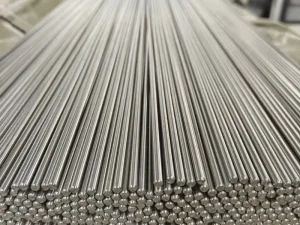
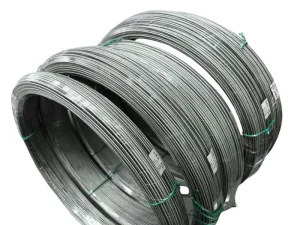
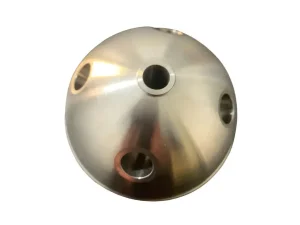
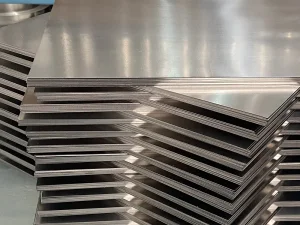
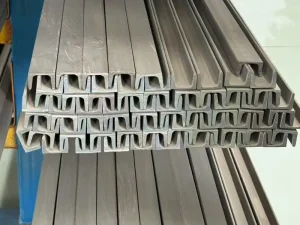
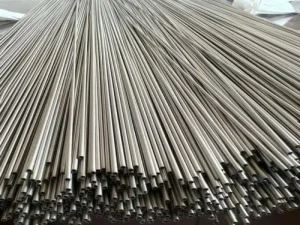
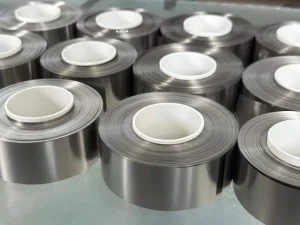
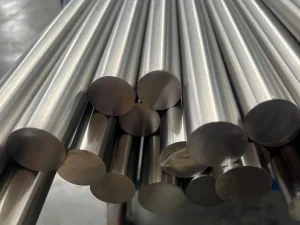
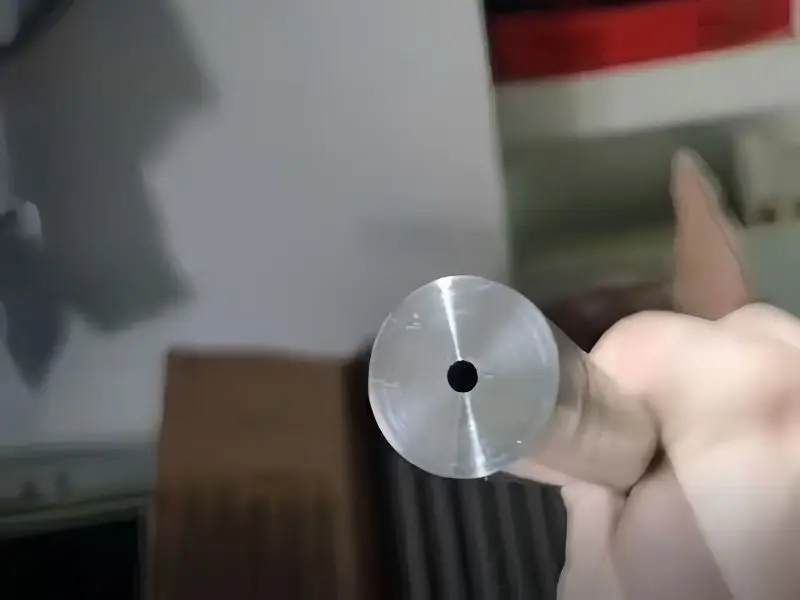
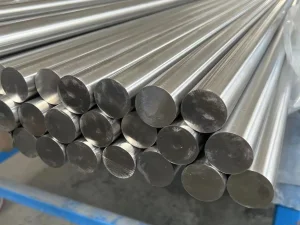
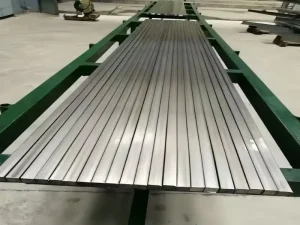
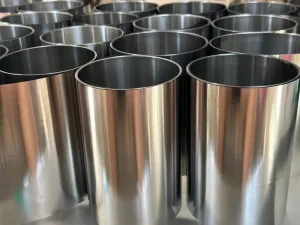
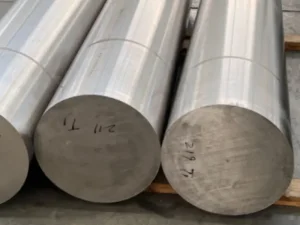
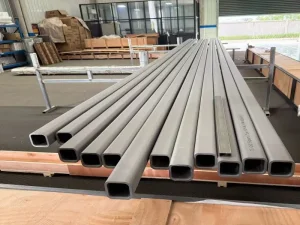
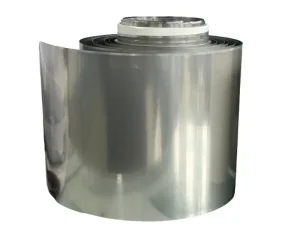
Explore our top-tier precision cold-rolled titanium foils, strips, rods, and profile structures engineered for extreme environments.
Industrial titanium foil is rapidly transitioning from a specialized alloy component to a cornerstone material across green tech, marine engineering, and aerospace manufacturing. To understand why industrial pure titanium (Grades 1, 2) and high-performance alloys (Grade 5, Grade 7, Grade 9, Grade 12) are indispensable, one must examine their deep structural micro-metallurgy. The crystalline integrity of titanium foil dictates its resistance to localized pitting and stress corrosion cracking (SCC). For instance, Grade 7 Titanium (Ti-0.2Pd) introduces a minute addition of palladium, establishing an exceptionally stable oxide layer in highly reducing environments that would rapidly corrode standard steels.
During cold rolling, maintaining precise mechanical consistency across thickness bands ranging from 0.005mm to 0.10mm requires strict thermal-mechanical treatment protocols. The transformation from ingot to ultra-thin foil involves multiple rolling passes on advanced Sendzimir mills, coupled with intermediate vacuum annealing steps. Standard annealing relaxes dislocation densities within the hexagonal close-packed (HCP) alpha crystal lattice, ensuring the material retains balanced tensile strength and ductility (elongation) for subsequent stampings or deep drawing processes.
| Grade | Standard | Composition Highlights | Mechanical Properties (Tensile / Yield) | Primary Industrial Applications |
|---|---|---|---|---|
| GR1 / CP-4 | ASTM B265 | 99.5% Ti Min, Low O2 | 240 MPa / 170 MPa | PEM electrolyzer bipolar plates, ultra-low load deep drawing |
| GR2 / CP-3 | ASTM B265 | 99.2% Ti Min, Standard O2 | 345 MPa / 275 MPa | Chemical process heat exchangers, desalination plant gaskets |
| GR5 (Ti-6Al-4V) | ASTM B265 | 6% Al, 4% V balance Ti | 895 MPa / 828 MPa | Aerospace structural membranes, high-stress acoustics diaphragm |
| GR7 (Ti-0.2Pd) | ASTM B265 | CP Ti + 0.12-0.25% Palladium | 345 MPa / 275 MPa | Hydrochloric/Sulfuric acid environment sealing, chlor-alkali cells |
| GR9 (Ti-3Al-2.5V) | ASTM B265 / B338 | 3% Al, 2.5% V balance Ti | 620 MPa / 483 MPa | Hydraulic tubing membranes, high-pressure sports & marine elements |
| GR12 (Ti-Mo-Ni) | ASTM B265 | 0.3% Mo, 0.8% Ni | 483 MPa / 345 MPa | High-temperature chemical processing, crevice corrosion resistance |
As a leading high-tech enterprise founded in 2001, ProX Metal has implemented a comprehensive industrial framework integrating state-of-the-art cold rolling equipment, continuous vacuum annealing lines, and real-time laser monitoring systems. Operating in accordance with ISO 9001:2015 standards and utilizing 14 national patents, our production lines yield an annual output of 8,000 tons of high-grade titanium and alloy products.
Our factory's primary competitive advantage lies in structural thickness control and surface finish optimization. Foil production requires strict tension control to eliminate shape defects such as center buckles, wavy edges, or surface pitting. Our 20-high cold rolling mills are coupled with automated thickness control (AGC) units to guarantee precise tolerances within +/- 0.002mm on ultra-thin runs. Intermediate bright annealing (BA) occurs under vacuum conditions of 10-3 Pa, preventing oxygen pick-up that embrittles the titanium substrate. This control loop guarantees consistent ductility, giving downstream manufacturers the confidence that every batch will perform uniformly during progressive die stamping.
For international procurement managers representing Tier 1 aerospace, chemical machinery, and electrochemistry companies, obtaining high-yield titanium foil is a complex process. Strategic sourcing involves defining precise mechanical properties, surface finishes, and packaging standards to eliminate structural micro-cracks before deployment. Standard material certifications under EN 10204 3.1 or 3.2 must accompany every shipment to trace raw material melt heats back to vacuum arc remelting (VAR) or electron beam melting (EBM) source ingots.
In chemical reactors, titanium foil acts as a critical corrosion barrier. The surface roughness (Ra) must be closely controlled; a rough surface increases localized boundary friction and risk of crevice corrosion in acidic mediums. ProX Metal provides a range of finishes: bright cold-rolled (equivalent to BA finish in stainless steel), pickled, or matte-roll finish depending on downstream lamination or plating needs. We ensure that our materials meet strict chemical purity thresholds, keeping trace impurities like Iron (Fe < 0.20%) and Oxygen (O2 < 0.15%) within optimal ranges to prevent early hydrogen embrittlement.
Resistant to highly corrosive organic acids, wet chlorine gas, chlor-alkali mixtures, and hot salt-water environments. Ideal for clad plates, heat exchanger tubesheets, and custom protective gaskets.
Delivering ultra-high strength-to-weight ratios under Grade 5 (Ti-6Al-4V) and Grade 9 profiles. Essential for weight-reduction panels, acoustic diaphragms, and engine exhaust housings.
Providing raw ultra-thin foils (0.01mm - 0.05mm) for Proton Exchange Membrane (PEM) water electrolyzers and fuel cell bipolar plates. Highly conductive and corrosion-resistant.
The industrial demand for titanium foil is shifting toward thinner gauges, higher mechanical strengths, and lower dimensional tolerances. Modern fuel cells and sub-sea sensors operate at higher press-rates and wider thermal cycles, demanding materials with high fatigue strength. Our R&D team is actively pursuing a roadmap to refine ultra-thin Grade 15 and Grade 23 ELI (Extra Low Interstitial) foils. Reducing interstitial carbon, nitrogen, and oxygen concentrations at the atomic level improves toughness and fracture resistance, crucial for cryogenic and medical implant environments.
Looking forward, the integration of automation into titanium manufacturing will enable online shape recognition, thickness adjustment, and surface defect detection using high-speed optical scanning. This minimizes scrap rates, improves coil yield, and provides global buyers with a reliable supply chain.
Direct technical parameters of our primary supply lines including sheet, plate, bar, and tube modules.
In response to shifting trade regulations, anti-dumping duties, and global environmental mandates, ProX Metal has implemented a comprehensive risk-management framework. We provide localized support through dedicated technical representatives and trade facilitators across key industrial regions, including North America, the European Union, South Korea, and Turkey. Our international shipping protocols ensure seamless customs clearance by providing all necessary paperwork, including complete HS code documentation (typically 8108.90 for titanium products), mill test certifications, and packaging compliance certificates.
From an environmental standpoint, our processes comply with REACH and RoHS directives. We source titanium raw material exclusively from conflict-free vendors and utilize advanced scrap reclamation loops that recycle close to 95% of processing scrap. This minimizes carbon footprints and aligns with our customers' ESG (Environmental, Social, and Governance) targets.
E-E-A-T validated feedback from industrial partners, manufacturing plants, and supply chain managers.
"ProX Metal provided prompt shipping updates and reliable support. Their post-sales resolution of a dimensional tolerance issue was quick and professional. We are confident in our continued partnership."
"We have collaborated with this manufacturer for over 10 years. The chemical and physical consistency of their titanium foil and strips remains stable from batch to batch, meeting our quality standards."
"Their shipping and logistics handled our large orders without delays, allowing us to maintain our production schedules."
"Their extensive inventory of various titanium grades makes them a valuable partner. Their patience and flexibility with sample orders have helped us expand our product offerings."
Critical metallurgical and procurement questions answered by our chief engineers.
Connect with our metallurgists and commercial managers to discuss grade selections, custom dimensions, and volume pricing. We respond to inquiries within 24 hours.
Send Inquiry EmailExplore our inventory of high-performance titanium bars, strips, custom-engineered foils, and titanium alloys.
 ProX Metal