10 Best Titanium Round Bar Manufacturers for Global Buyers

Time:2026-10-13 Author:Sophia
0%

Choosing a reliable supplier from the 10 Best Titanium Round Bar Manufacturers for Global Buyers requires more than comparing prices. Titanium round bars support aircraft fittings, chemical-processing equipment, medical devices, and demanding industrial assemblies. Their performance depends on alloy chemistry, forging practice, heat treatment, surface condition, and dimensional control.

This guide examines manufacturers through practical purchasing evidence. It considers ASTM B348 compliance, available grades, diameter ranges, ultrasonic testing, inspection reports, and delivery capability. Mill test certificates matter. So do traceable heat numbers and responsive technical support. A bright surface can look impressive, but it cannot prove internal quality. Buyers should inspect production records, not marketing language alone.

Matthew J. Donachie Jr., author of Titanium: A Technical Guide, wrote, “Titanium is a relatively new engineering material, having been first produced in quantity in the 1950s.” His observation still matters. Titanium remains technically demanding, especially during melting, rolling, and heat treatment. Strong Titanium Round Bar Manufacture depends on controlled atmospheres, accurate temperature management, and experienced inspection teams.

The manufacturers below are assessed with global procurement realities in mind. Export experience helps. Stable packaging and clear documentation help more. Some rankings may overlook a capable regional producer. No list is perfect. That is why buyers should verify current certifications, production capacity, and application experience before placing an order. A supplier that answers difficult questions clearly is often worth closer attention.
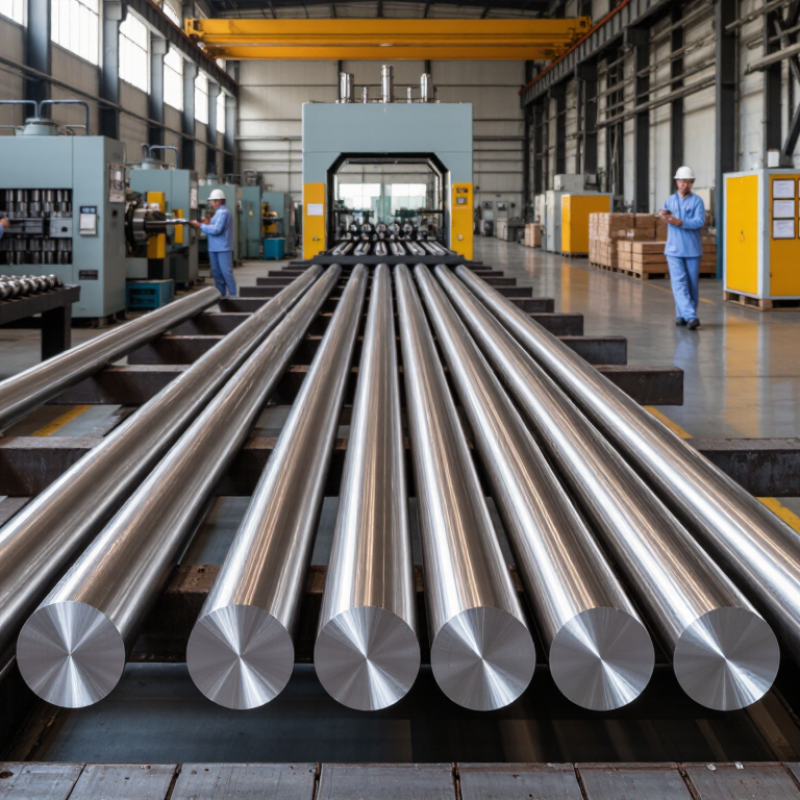
10 Best Titanium Round Bar Manufacturers for Global Buyers

What Titanium Round Bar Is and Why Global Buyers Choose It

Titanium round bar is a solid, cylindrical product used for shafts, fasteners, medical components, and aircraft parts. Its density is about 4.5 g/cm³, roughly 40% lower than steel. Yet many titanium grades deliver strong mechanical performance. A protective oxide film also helps the metal resist seawater, chlorides, and many industrial chemicals. ASTM B348 defines requirements for titanium and titanium alloy bars and billets. Global buyers often choose it when lower weight, long service life, and corrosion resistance justify higher material costs.

Market data supports this demand. The U.S. Geological Survey’s Mineral Commodity Summaries 2024 estimated global titanium sponge production at about 280,000 metric tons in 2023. Sponge is not finished bar, but it indicates a substantial upstream supply base. Buyers should still check melt origin, grade, diameter tolerance, surface condition, and test certificates. A low price can hide poor traceability. Titanium is not a magic metal. It can gall during machining, and unsuitable heat treatment may weaken performance.

Tips: Match the grade to the environment, not just the strength requirement. Request chemical analysis, tensile results, ultrasonic inspection, and ASTM conformity documents. Confirm whether the bar is forged, rolled, or ground. Those details affect machining behavior and final dimensions. A qualified supplier should explain them clearly, without vague promises.

How to Evaluate Titanium Round Bar Manufacturers Worldwide

Evaluating titanium round bar manufacturers worldwide requires more than comparing prices. I look for evidence that a supplier can repeat quality across different production batches. A polished website proves little. Recent mill certificates matter more.

Check the titanium grade, diameter tolerance, surface condition, and required standard. Ask whether chemical analysis comes from each heat or only from a general report. Reliable manufacturers should provide heat numbers, inspection records, and clear traceability from billet to finished bar. Their certificates should match the shipment, not an older sample. Small details reveal discipline.

Production experience also deserves close attention. Ask about forging, rolling, machining, ultrasonic testing, and final inspection capabilities. Request a sample bar when the application is critical. Measure its diameter at several points with calibrated equipment. I once treated a stated tolerance as sufficient, but later found that inconsistent ends created machining waste. That mistake changed my supplier checklist.

Audit the manufacturer’s quality system, laboratory controls, packaging, and export documentation. Confirm realistic lead times, minimum order quantities, and how they handle nonconforming material. Fast replies are useful, but technical answers are better. A supplier that admits a limitation may be more dependable than one promising everything. Independent inspection can add cost, yet it may protect a larger investment. Price still matters, just not alone.

Key Standards, Grades, and Quality Certifications to Compare

10 Best Titanium Round Bar Manufacturers for Global Buyers

When comparing titanium round bar manufacturers, start with the applicable product standard. ASTM B348 commonly covers titanium and titanium alloy bars for general industrial use. Aerospace buyers may also require AMS specifications, controlled processing, and documented special-process approvals. The standard should match the end use, not merely appear on a quotation.

Grade selection affects strength, corrosion resistance, and machining behavior. Commercially pure Grades 1 to 4 suit many chemical-processing and heat-exchanger applications. Grade 5, or Ti-6Al-4V, offers higher strength for demanding mechanical components. Grade 23 can be relevant where improved fracture toughness and lower oxygen content matter. Confirm the grade by checking the heat chemistry, tensile results, elongation, and dimensions on the material test certificate.

Traceability matters most.

Reliable manufacturers should provide heat numbers, forging records, inspection reports, and clear country-of-origin information. Ask whether ultrasonic testing is available for critical bars, and verify diameter tolerance against the purchase specification. ISO 9001 indicates a quality-management system, while AS9100 may support aerospace supply chains. However, a certificate alone proves little if records are incomplete or expired. I would also examine calibration controls, nonconformance handling, and sample reports from recent production. A polished certificate wall can still hide weak traceability. Buyers sometimes overlook packaging, yet wet timber or salt exposure can stain titanium before arrival. Independent inspection is useful for large orders, although it adds time and cost. That trade-off deserves honest review.

10 Leading Titanium Round Bar Manufacturers for International Sourcing

10 Leading Titanium Round Bar Manufacturers for International Sourcing

International buyers need more than a polished catalog. They need stable chemistry, reliable dimensions, and documents that survive customs review. The USGS Mineral Commodity Summaries 2024 reported approximately 8.8 million metric tons of global ilmenite and rutile production in 2023. That figure shows a large upstream market, but it does not guarantee consistent bar quality. Ten leading titanium round bar manufacturers should therefore be assessed through mill certificates, melt origin, and production records.

Experienced suppliers usually provide bars under ASTM B348, with clear grades such as Grade 2 or Grade 5. Ask for tensile results, hardness values, surface inspection records, and ultrasonic testing where critical parts are involved. A bar should arrive with readable heat numbers. Small details matter. Diameter tolerance can affect machining waste, especially when a 50 mm bar becomes a precision shaft. ISO 9001 certification helps, but it is not proof of metallurgical performance.

UN Comtrade trade data can reveal shipment patterns, export concentration, and changing customs routes. Buyers should compare those records with lead times, packaging photographs, and recent inspection reports. Request sample documents before placing a large order. This catches vague chemistry ranges and missing traceability early. My own caution is simple: supplier rankings can become outdated quickly. Capacity claims may also reflect equipment, not actual export experience. A careful audit still beats a confident webpage.

How to Compare Pricing, Lead Times, and Export Support

When comparing titanium round bar manufacturers, start with an equivalent specification. Record grade, diameter, length, surface condition, tolerance, testing, and minimum order quantity. Otherwise, a cheap quote may simply exclude ultrasonic testing or export packing. The USGS Mineral Commodity Summaries 2024 reported approximately 9.8 million metric tons of titanium mineral concentrates produced worldwide in 2023. That broad supply base does not guarantee stable bar pricing. Energy, sponge availability, conversion yield, and certification costs still influence each offer.

Ask for a line-by-line quotation. It should show the metal price, processing charge, inspection fee, freight basis, and Incoterm. Compare delivered cost, not only mill price. I have seen buyers choose a lower offer, then pay more for missing certificates and repacking. It happens.

Lead times need separate milestones. Request dates for material allocation, forging, heat treatment, testing, final inspection, and dispatch. A realistic supplier shares a production schedule, not “fast delivery.” The World Bank’s 2023 Logistics Performance Index assessed 139 economies across customs, infrastructure, tracking, and timeliness. Use these indicators when judging export reliability. Check whether the supplier provides a packing list, certificate of origin, commercial invoice, material test report, and insurance documents. Drewry’s World Container Index publishes weekly spot benchmarks across major routes, but freight reports can lag sudden disruptions. Leave room for error. Shipping estimates are never perfectly clean.

10 Best Titanium Round Bar Manufacturers for Global Buyers - How to Compare Pricing, Lead Times, and Export Support

Anonymous supplier comparison based on commonly published international specifications and indicative market ranges for titanium round bar procurement.
Rank Manufacturer Profile Typical Titanium Grades Common Standards Typical Diameter Range Indicative Export Price* Standard Lead Time Minimum Order Export Documentation Quality & Testing Export Support Buyer Fit Overall Rating
1 Profile A
Integrated mill
Grade 2, Grade 5, Grade 23 ASTM B348, AMS 4928, ASTM B381 6–400 mm US$22–48/kg 4–8 weeks 100 kg Mill test certificate, certificate of origin, commercial invoice, packing list 100% dimensional inspection; chemical analysis; tensile testing Strong
FOB, CIF, DAP options
Large industrial and aerospace orders 4.8/5
2 Profile B
Forging specialist
Grade 2, Grade 5, Grade 7 ASTM B348, ASTM B381, ASME SB348 20–500 mm US$21–46/kg 5–9 weeks 150 kg EN 10204 3.1 certificate, heat-lot traceability, export customs documents Ultrasonic testing available; hardness and tensile reports Strong
Container and consolidated cargo
Heavy sections and pressure-equipment supply 4.7/5
3 Profile C
Stock-supported producer
Grade 2, Grade 5, Grade 9 ASTM B348, AMS 4928, ISO 9001 procedures 3–300 mm US$24–52/kg 1–4 weeks from stock
5–7 weeks made-to-order
25 kg Mill certificate, packing list, certificate of origin, HS-code support Positive material identification; dimensional and surface inspection Very strong
Fast samples and air freight
Small and medium international buyers 4.7/5
4 Profile D
Aerospace-focused
Grade 5, Grade 23, Grade 9 AMS 4928, ASTM B348, AS9100-based controls 8–250 mm US$30–65/kg 6–12 weeks 50 kg Full traceability package, inspection report, certificate of conformity Ultrasonic, eddy-current, microstructure and tensile testing Strong
Aviation packaging and documentation
Aerospace, medical and high-specification components 4.6/5
5 Profile E
Value manufacturer
Grade 2, Grade 5 ASTM B348, ASTM B381, ISO 9001 procedures 6–220 mm US$18–38/kg 4–7 weeks 200 kg Mill test certificate, commercial invoice, packing list Chemical composition, tensile properties and dimensional inspection Good
FOB and CIF quotations
Cost-sensitive industrial applications 4.5/5
6 Profile F
Medical-grade specialist
Grade 5 ELI, Grade 23, commercially pure titanium ASTM F136, ASTM B348, ISO 13485 controls 4–180 mm US$35–78/kg 7–14 weeks 25 kg Heat-lot traceability, certificate of conformity, inspection dossier Microstructure, chemistry, tensile, surface and ultrasonic testing Strong
Regulated-market documentation
Implants and medical-device machining 4.5/5
7 Profile G
Custom machining partner
Grade 2, Grade 5, Grade 9 ASTM B348, AMS 4928 10–160 mm US$25–55/kg 3–8 weeks 50 kg Mill certificate, dimensional report, export packing documentation Surface roughness, straightness and dimensional inspection Very strong
Cut-to-length and machining support
OEMs requiring ready-to-machine lengths 4.4/5
8 Profile H
Small-batch supplier
Grade 2, Grade 5 ASTM B348, ASTM B381 3–100 mm US$28–60/kg 2–5 weeks from stock 10 kg Mill certificate and standard commercial export documents Basic chemistry, tensile and dimensional inspection Good
Courier and air-freight support
Prototyping, maintenance and laboratory orders 4.3/5
9 Profile I
Large-volume producer
Grade 2, Grade 5, Grade 12 ASTM B348, ASTM B381, ASME SB348 16–600 mm US$19–42/kg 8–16 weeks 500 kg Heat certificates, packing list, certificate of origin and customs support Mechanical testing, chemical analysis and ultrasonic testing by request Moderate
Best for planned shipments
Energy, chemical processing and large fabrication projects 4.2/5
10 Profile J
Distributor-manufacturer
Grade 2, Grade 5, Grade 23 ASTM B348, AMS 4928 5–250 mm US$26–58/kg 2–6 weeks 20 kg Mill certificate, certificate of conformity and standard export documents Supplier-lot verification; dimensional and visual inspection Good
Multi-origin sourcing and consolidation
Buyers needing mixed sizes or grades 4.1/5
*Indicative export prices are typical market ranges in USD per kilogram for titanium round bar and can change significantly with grade, diameter, tolerance, surface condition, quantity, certification level, freight terms and destination. Confirm current pricing, availability, standards and export documentation directly before placing an order.

FAQS

What is titanium round bar used for?

It is a solid cylindrical product for shafts, fasteners, medical components, and aircraft parts. It is strong and relatively light.

Why do buyers choose titanium instead of steel?

Titanium weighs about 40% less than steel by volume. It also resists seawater, chlorides, and many industrial chemicals. The higher price still needs justification.

Which details should buyers confirm before ordering?

Confirm grade, diameter tolerance, length, surface condition, and melt origin. Request chemical analysis and tensile results. Readable heat numbers matter.

Does a recognized material standard guarantee good bar quality?

No. A standard defines requirements, but production records still need checking. Ask for inspection reports and conformity documents. Paperwork is not the whole story.

How can buyers compare two titanium bar quotations fairly?

Match grade, diameter, length, tolerance, testing, packaging, and order quantity. Request a line-by-line quotation. Cheap can become expensive.

What testing may be important for critical components?

Buyers may request tensile testing, hardness results, surface inspection, and ultrasonic testing. The required tests depend on the component’s use. More testing costs more.

Does the bar’s manufacturing method affect performance?

Yes. Forged, rolled, and ground bars can behave differently during machining. These processes also influence final dimensions and surface condition. Ask for clear process details.

How should buyers judge delivery promises?

Request milestones for material allocation, forging, heat treatment, testing, inspection, and dispatch. A detailed schedule is more useful than “fast delivery.” Delays still happen.

What export documents should a supplier provide?

Common documents include a packing list, commercial invoice, origin certificate, material report, and insurance documents. Check samples before ordering heavily. Missing paperwork can delay clearance.

What risks should buyers remember about titanium round bar?

Titanium can gall during machining, and unsuitable heat treatment may reduce performance. A low price may hide weak traceability. I might judge a supplier too quickly. A careful audit is safer.

Conclusion

Titanium round bar is valued by global buyers for its high strength-to-weight ratio, corrosion resistance, durability, and performance in demanding industries such as aerospace, chemical processing, energy, and medical equipment. This guide explains what titanium round bar is, why it is selected for international projects, and how buyers can evaluate manufacturers by production capacity, technical expertise, material traceability, and quality control. A reliable Titanium Round Bar Manufacture should provide consistent dimensions, stable mechanical properties, and clear documentation for every shipment.

The article also compares common titanium grades, international standards, testing procedures, and certifications that support dependable sourcing decisions. It introduces ten leading types of manufacturers without focusing on brand names, while highlighting practical ways to compare pricing, minimum order quantities, lead times, packaging, logistics, and export support. By reviewing these factors together, buyers can identify qualified suppliers, reduce procurement risks, and build a more efficient global sourcing strategy for titanium round bar.


Sophia

Sophia

Sophia is a dedicated marketing professional with an exceptional depth of knowledge about her company's products and services. With a keen understanding of market trends and customer needs, she crafts insightful blog posts that not only inform but also engage readers, enriching the company’s online......