The demand for Unalloyed Titanium Bar has surged in various industries, including aerospace, medical, and automotive. This material is celebrated for its superior strength-to-weight ratio and excellent corrosion resistance. Manufacturers and engineers often seek reliable suppliers who can provide consistent quality and specifications.
In this guide, we will delve into the specifications of Unalloyed Titanium Bar. Understanding these standards is crucial for both end-users and suppliers. The bar’s dimensions, tolerances, and mechanical properties must align with industry requirements. Each detail plays a significant role in ensuring the material will perform as expected in critical applications.
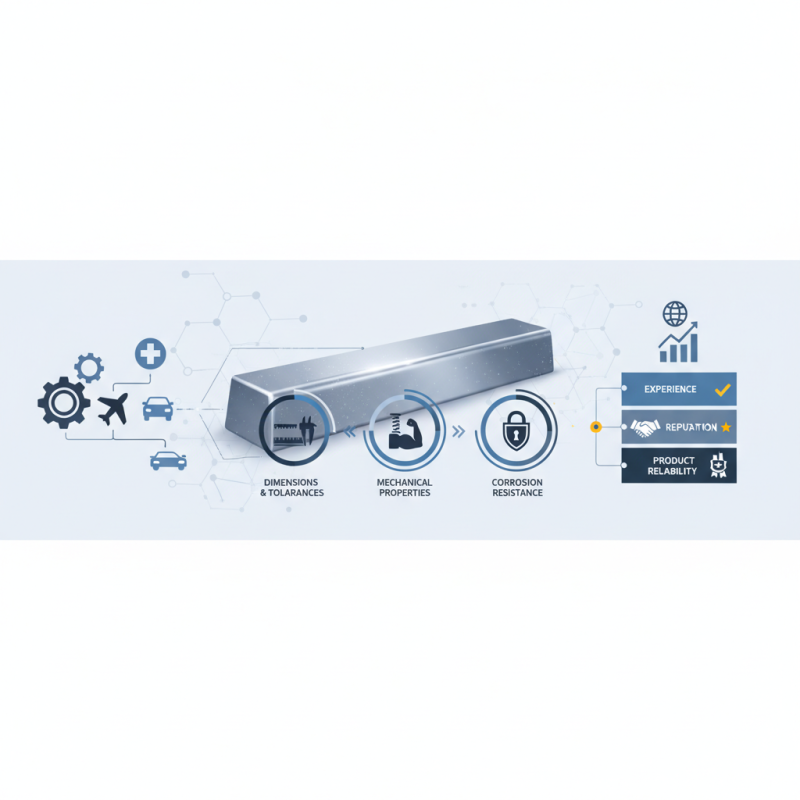
While many suppliers offer Unalloyed Titanium Bar, not all meet stringent quality benchmarks. It’s essential to approach this search with careful consideration. Prospective buyers should evaluate suppliers based on experience, reputation, and product reliability. This guide aims to provide insights into top global suppliers and to outline key factors to ponder before making a purchase.
Unalloyed Titanium Bar: Overview and Key Properties
Unalloyed titanium bars are notable for their strength and lightweight properties. They exhibit excellent corrosion resistance, making them suitable for various applications, including aerospace and automotive industries. Their low density allows for the reduction of weight in structural components, enhancing performance.
However, processing unalloyed titanium can be challenging. It requires specialized equipment and techniques to prevent contamination. Issues like high-temperature sensitivity can complicate manufacturing. Despite these drawbacks, the material’s favorable strength-to-weight ratio remains advantageous for engineers looking to improve efficiency.
In industrial settings, unalloyed titanium bars are often specified for critical components. This includes fasteners, brackets, and frames that demand high durability and resistance to fatigue. Understanding the specific grades of unalloyed titanium and their properties is essential for effective application. Missteps in material selection can lead to project failures or increased costs. Therefore, thorough research and material testing are imperative for optimal results.
Specifications for Unalloyed Titanium Bars: Standards and Dimensions
Unalloyed titanium bars are essential in various industries, known for their strength and corrosion resistance. The specifications for these bars follow strict standards to ensure quality and performance. Typically, these bars range from 6 mm to over 100 mm in diameter. The ASTM B348 is a commonly referenced standard, defining important characteristics such as chemical composition and mechanical properties.
The dimensions of unalloyed titanium bars can vary significantly based on application needs. Industries often require specific lengths and tolerances in their projects. While many suppliers adhere to set standards, variations can occur. Therefore, it is crucial for buyers to verify specifications. They should insist on compliance with industry standards to avoid potential issues.
Designing with unalloyed titanium bars presents challenges. Fabricators often face difficulties with machining due to titanium's hardness. Lubrication plays a vital role in the machining process. This aspect requires careful planning and execution. While many producers claim to offer high-quality products, inconsistencies in delivery and quality can arise. Buyers must conduct due diligence and build strong relationships with suppliers. This helps to minimize problems and enhance production reliability.
Major Global Suppliers of Unalloyed Titanium Bars: A Comprehensive List
Unalloyed titanium bars are critical in various industries, including aerospace, medical, and automotive sectors. These bars offer excellent corrosion resistance and high strength-to-weight ratios, making them a preferred choice for demanding applications. According to a recent market analysis, the global titanium market is projected to grow at a CAGR of 5.4% from 2022 to 2027. This growth underscores the importance of reliable suppliers in the titanium supply chain.
A comprehensive list of major global suppliers of unalloyed titanium bars reveals a diverse array of companies. Many suppliers focus on innovative manufacturing techniques and sustainability. Approximately 60% of these suppliers have invested heavily in R&D to enhance product quality. However, some suppliers may struggle with inconsistent supply and fluctuating pricing. Industry analysts have noted that effective communication and partnerships can mitigate these challenges.
In addition, market dynamics are evolving, with emerging suppliers in regions like Southeast Asia and Eastern Europe. While these companies offer competitive pricing, their quality may not always meet stringent industry standards. Regular audits and quality checks are crucial for buyers. Lack of attention in this area can lead to costly failures. Data indicate that over 30% of titanium-related disputes arise due to quality inconsistencies. Thus, maintaining a list of vetted suppliers is vital for procurement professionals.
Applications of Unalloyed Titanium Bars in Various Industries
Unalloyed titanium bars demonstrate remarkable versatility across various industries. Their unique properties, such as excellent corrosion resistance and high strength-to-weight ratios, make them favorable in sectors like aerospace, medical, and marine. According to industry reports, the aerospace sector is expected to lead the growth of titanium applications, with an anticipated CAGR of around 6% from 2023 to 2030. This growth is driven by the demand for lightweight materials that enhance fuel efficiency in aircraft.
In the medical field, unalloyed titanium bars are increasingly used in surgical implants. They are biocompatible and do not provoke adverse reactions in the human body. Industry data indicates that the global market for titanium medical devices is projected to exceed $3 billion by 2025. This growth highlights the material's significance in ensuring patient safety and improving surgical outcomes, though challenges remain regarding long-term durability and cost of production.
Applications in the marine environment also illustrate the material's adaptability. Unalloyed titanium exhibits exceptional resistance to saltwater corrosion, making it ideal for components in boats and offshore structures. However, the high initial expense can deter widespread adoption. The market must address these cost barriers while ensuring quality and performance to fully leverage titanium's potential across these industries.
Quality Control and Testing Methods for Titanium Bar Production
Quality control is vital in titanium bar production. It ensures the material meets specific standards. Manufacturers should adopt rigorous testing methods. These may include visual inspections and dimensional checks. Machines may oftentimes deliver inaccurate results. Human oversight can mitigate these risks. A trained technician can spot defects easily.
Destructive testing is also essential. This process can reveal the material's mechanical properties. It includes tensile tests and impact tests. Results provide insights into how the titanium bar will perform under stress. However, this method does waste some material. Manufacturers must balance between accurate testing and resource use.
Non-destructive testing methods are gaining popularity. Techniques like ultrasonic testing offer valuable information without damaging the sample. They can identify internal flaws effectively. However, not every method is foolproof. Each has limitations that manufacturers need to understand. Training and experience play critical roles in interpreting results accurately.
Unalloyed Titanium Bar Specifications and Quality Control
FAQS
: Unalloyed titanium bars are strong, lightweight, and resistant to corrosion. They are ideal for various applications.
Processing requires specialized equipment. High-temperature sensitivity and contamination are common issues that complicate manufacturing.
Incorrect choices can lead to project failures. Thorough research and testing are essential for successful outcomes.
They range from 6 mm to over 100 mm in diameter. Standards ensure quality but can vary based on supplier.
Titanium's hardness makes machining difficult. Proper lubrication is critical to avoid complications during the machining process.
They are popular in aerospace, medical, and marine sectors. Each industry utilizes their unique properties for various applications.
It is biocompatible and suitable for surgical implants. However, challenges like long-term durability remain a concern.
The high initial expense can deter adoption. Addressing cost barriers is essential for maximizing titanium's potential.
Compliance ensures quality and prevents issues. Buyers should verify specifications to avoid complications in their projects.
Building strong relationships and conducting due diligence can minimize delivery and quality inconsistencies during production.
Conclusion
The article titled "Unalloyed Titanium Bar Specifications and Global Suppliers Guide" provides a comprehensive overview of unalloyed titanium bars, highlighting their essential properties and specifications. It details the standards and dimensions that govern the production of these bars, ensuring consistency and quality across various applications. The article also presents a thorough guide to major global suppliers, offering insights into sourcing options for different industries.
Furthermore, the piece explores the diverse applications of unalloyed titanium bars, showcasing their significance in sectors such as aerospace, medical, and automotive. It emphasizes the importance of quality control and testing methods used in titanium bar production to guarantee performance and reliability. Overall, the article serves as a valuable resource for understanding the specifications, suppliers, and applications of unalloyed titanium bars in today's market.

 ProX Metal