Battery demand is expanding quickly, but titanium foil remains a specialized material rather than a standard lithium-ion component. The International Energy Agency reported that global electric-vehicle battery demand exceeded 750 GWh in 2023. It also recorded more than 14 million electric car sales worldwide that year. These figures show why manufacturers need reliable, traceable, and technically consistent materials.
Battery Components Titanium Foil can support demanding applications requiring corrosion resistance, dimensional stability, and controlled surface quality. It may serve as a current collector, electrode substrate, separator support, or component in advanced battery prototypes. However, titanium foil is not automatically the best choice. Copper and aluminum remain more common in mainstream lithium-ion cells. That distinction matters.
This guide examines seven suppliers through practical purchasing criteria. These include titanium grade, foil thickness, width tolerance, surface finish, roll availability, certification, and production scalability. Supplier experience with battery research is also important. A mill producing aerospace sheet may not understand slurry coating or calendering requirements. Small details matter, especially when a foil wrinkles inside a coin cell or shows inconsistent resistance across a roll.
The IEA’s Global EV Outlook 2024 highlights continuing pressure on battery supply chains. Meanwhile, the U.S. Department of Energy’s battery research programs emphasize performance validation, manufacturing consistency, and domestic supply resilience. Those priorities shape this comparison. A ranking is never absolute. Prices, lead times, testing methods, and regional logistics can change the result. Buyers should request current datasheets, sample rolls, certificates of analysis, and independent test results before placing volume orders.
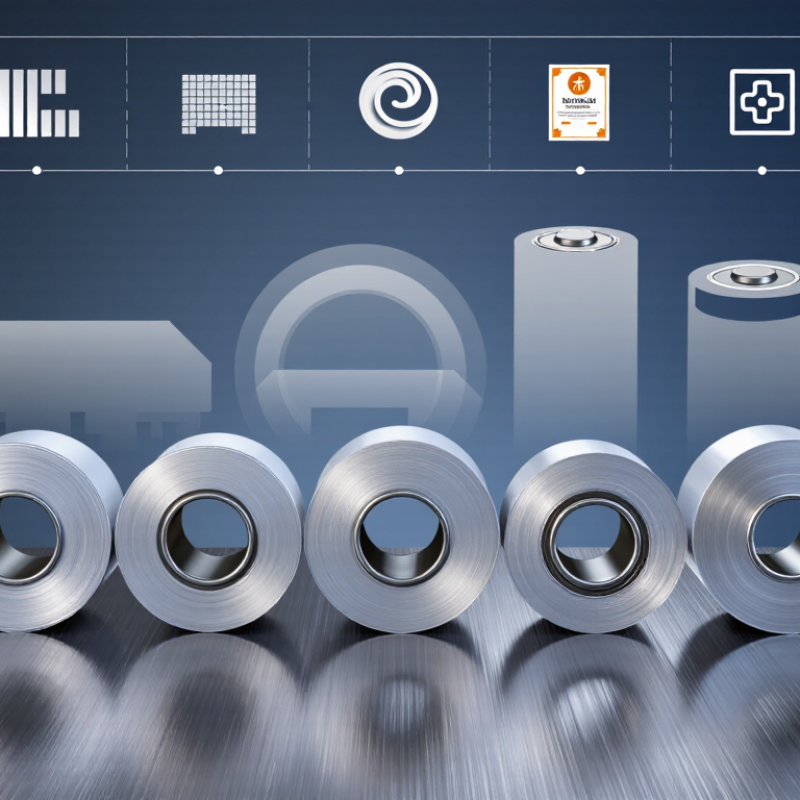
Titanium Foil’s Role in Advanced Battery Components
Titanium foil supports advanced battery designs where corrosion resistance and dimensional stability matter. It can serve as a current-collector substrate, protective layer, or structural component in specialized cells. Its stable oxide surface helps resist aggressive electrolytes and repeated thermal exposure. Conductivity is lower than copper or aluminum. That trade-off requires careful cell design.
A reliable supplier should provide controlled thickness, clean edges, and consistent surface roughness. Typical checks include pinholes, burrs, tensile strength, elongation, and chemical composition. Thickness variation can affect coating weight and stack pressure. Tiny defects matter. Foil may arrive bright, etched, or textured, depending on the coating process. A smooth surface is not always better. Some electrode layers need controlled roughness for stronger adhesion.
Supplier qualification should include traceable batch records, inspection reports, and small trial rolls. Ask for samples that match the intended thickness and width. Test them with the actual electrolyte and coating recipe. Paper compliance alone is insufficient. A supplier may meet a general specification yet fail during slitting or welding. Packaging also deserves attention because moisture, dust, and edge damage can compromise clean-room assembly. Cost comparisons should include yield, handling, and rejected material, not only price per kilogram. The technical fit is often less obvious than the purchasing quote.
Representative minimum tensile strength values for commonly specified titanium grades used when evaluating foil for corrosion-resistant battery components.
Titanium foil is valued in advanced battery designs for its corrosion resistance, low density, and stability in demanding electrochemical environments. Commercially pure grades are commonly considered when formability and chemical resistance are priorities, while titanium alloy grades offer higher mechanical strength. Actual foil selection also depends on thickness, surface finish, porosity, electrical contact resistance, purity, and the battery chemistry.
Data reference: representative minimum tensile-strength values from commonly published ASTM titanium material specifications; values may vary by product form, condition, and supplier.
7 Best Titanium Foil Battery Components Suppliers?
Key Criteria for Evaluating Titanium Foil Suppliers
Selecting a titanium foil supplier requires more than comparing quoted prices. Battery component buyers should verify foil purity, thickness tolerance, tensile strength, and surface consistency. Ask for recent test reports, not outdated certificates. A reliable supplier can provide heat-lot traceability, chemical analysis, and production records for each shipment. Small details matter. A variation of a few microns can affect coating uniformity and cell performance.
Examine the foil surface under suitable lighting. Look for scratches, pinholes, edge cracks, oil marks, and uneven rolling lines. Request samples cut to your actual width and thickness. Laboratory samples may look excellent, while production coils behave differently. That gap deserves attention. Suppliers should explain their rolling process, annealing controls, cleaning methods, and inspection frequency. Independent testing can confirm claims about composition, mechanical properties, and corrosion resistance.
Packaging and delivery controls also reveal supplier maturity. Foil should arrive sealed, dry, clearly labeled, and protected from edge damage. Review minimum order quantities, lead times, replacement policies, and technical response speed. A supplier with strong documentation is easier to audit and qualify. However, certificates alone are not proof of consistent performance. Conduct a small production trial, record defects, and compare results across multiple lots. The cheapest option may create higher costs through rejected material, delayed assembly, or repeated qualification work.
A reliable supplier shortlist should examine seven capabilities, not only price. The first profile is a vacuum-melting producer, offering controlled chemistry and low inclusion levels. A second is a precision rolling specialist, supplying thin foil with stable thickness across long coils. The third focuses on ultra-clean slitting, where burr control protects delicate battery assembly. The fourth provides surface-treated foil for improved bonding and corrosion resistance. A fifth operates as a qualified stockist, supporting smaller development orders and shorter delivery windows. The sixth serves pilot lines, offering rapid thickness changes and technical sampling. The seventh combines production with recycling, potentially reducing material waste and supply risk.
Market demand supports this supplier focus. The International Energy Agency reported that global electric-car battery demand exceeded 750 GWh in 2023. That scale increases pressure on consistency, traceability, and delivery performance. The U.S. Geological Survey’s Mineral Commodity Summaries also identifies titanium sponge and titanium feedstock as strategically important industrial materials. Foil buyers should therefore request melt records, thickness maps, tensile data, surface inspection results, and lot-level certificates.
Cost still matters. It should not dominate the assessment. In practical audits, a low quotation can hide wider thickness variation or limited technical support. One weakness in many supplier comparisons is the lack of independent batch testing. Buyers should verify claims through sample trials, microscopy, and repeat-order checks.
The most convincing supplier is not always the largest. Sometimes, the better partner is the one that reports problems early.
Choosing the seven best titanium foil battery component suppliers requires more than comparing prices. Material quality should be checked through titanium grade, purity, thickness tolerance, surface cleanliness, and edge condition. For battery use, small particles or pinholes can affect coating adhesion and cell consistency. A reliable supplier provides batch certificates, inspection data, and traceable heat numbers. That matters.
Manufacturing capability separates a catalog seller from a dependable production partner. Review melting controls, rolling schedules, annealing conditions, slitting accuracy, and packaging practices. Ask whether the supplier can maintain stable thickness across long coils, not only short samples. Samples can mislead. I would also examine flatness, burr levels, tensile behavior, and surface roughness under the intended assembly process. Independent testing is useful when internal data seems incomplete.
Customization is equally important for battery component development. Useful options may include narrow widths, special tempers, punched openings, shaped tabs, cleaned surfaces, or compatible coatings. The best supplier should discuss minimum order quantities, tooling charges, lead times, and design limits before promising results. Technical communication reveals practical experience. However, no supplier performs perfectly in every category. My own evaluation could overvalue polished documentation and undervalue production flexibility. A pilot order, repeated dimensional checks, and a controlled assembly trial provide stronger evidence than a sales presentation.
| Rank | Supplier | Primary Titanium Grades | Typical Foil Thickness | Manufacturing Process | Thickness Tolerance | Surface Finish | Battery Component Applications | Customization Capability | Quality Documentation | Typical Lead Time | Overall Assessment |
|---|---|---|---|---|---|---|---|---|---|---|---|
| 1 | Supplier A | Grade 1, Grade 2, Grade 5 | 0.020–0.500 mm | Cold rolling, annealing, precision slitting | ±3% for standard gauges; tighter by agreement | Bright rolled, matte rolled, chemically cleaned | Current collectors, tabs, shielding layers, battery housings | Custom width, slit coils, cut sheets, edge conditioning | Mill test certificate, dimensional report, surface inspection | 3–6 weeks | Best overall balance of material control, precision, and customization |
| 2 | Supplier B | Grade 1, Grade 2 | 0.025–0.300 mm | Cold rolling and vacuum annealing | ±4% for standard products | Smooth rolled, low-residue cleaned | Electrochemical cells, separator support parts, flexible tabs | Small-width slitting, punched blanks, custom coil lengths | Material certificate, thickness and width inspection records | 4–7 weeks | Strong choice for commercially pure titanium foil and stable supply |
| 3 | Supplier C | Grade 2, Grade 5, Grade 7 | 0.030–0.800 mm | Hot breakdown rolling followed by cold reduction | ±5% for thin foil; project-specific tolerance available | Standard rolled and pickled | Structural battery parts, corrosion-resistant liners, cell hardware | Custom alloy sourcing, wide coils, profile slitting | Chemical composition report, mechanical test report, traceability records | 5–8 weeks | Well suited to corrosion-focused designs and larger component formats |
| 4 | Supplier D | Grade 1, Grade 2 | 0.015–0.200 mm | Ultra-thin cold rolling and tension leveling | ±5% for ultra-thin gauges | Low-roughness bright finish | Thin current collectors, flexible battery tabs, compact cells | Micro-width slitting, custom roll length, burr-control options | Gauge map, flatness report, burr and edge inspection | 4–8 weeks | Best suited to lightweight and space-constrained battery designs |
| 5 | Supplier E | Grade 2, Grade 5 | 0.050–1.000 mm | Cold rolling, annealing, precision shearing | ±6% for thin gauges; ±0.030 mm above 0.500 mm | Rolled, brushed, pickled | Battery trays, covers, reinforcement parts, thermal barriers | Large-format sheets, custom cut lengths, forming-ready tempers | Mill certificate, hardness data, visual and dimensional inspection | 3–7 weeks | Practical option for thicker battery hardware and formed components |
| 6 | Supplier F | Grade 1, Grade 2, Grade 9 | 0.025–0.600 mm | Cold rolling, stress relieving, edge trimming | ±5% for standard gauges | Smooth rolled and degreased | Flexible interconnects, tabs, corrosion-resistant cell parts | Custom temper, narrow strips, prototype quantities | Certificate of conformity, alloy analysis, basic dimensional report | 2–5 weeks for standard sizes | Good option for prototypes, pilot runs, and moderate-volume orders |
| 7 | Supplier G | Grade 2, Grade 5 | 0.100–1.500 mm | Hot rolling, cold finishing, CNC cutting | ±8% for foil; ±0.050 mm for thicker sheet | Standard mill finish, pickled | Battery enclosures, protection plates, structural support parts | Laser cutting, CNC machining, formed blanks | Material certificate, chemical analysis, cut-part inspection | 4–9 weeks | Most appropriate for thicker components where machining is required |
Selecting a titanium foil supplier requires more than comparing prices. Begin with the foil grade, purity, thickness, width, and intended battery application. Small variations matter. Ask for dimensional tolerances, surface-finish data, and mechanical properties from recent production lots. A dependable supplier should explain how its foil performs during coating, stamping, welding, or assembly. Vague answers deserve caution.
Request a small sample before approving a large order. Measure thickness at several points, not only at the center. Check the edges for burrs, cracks, uneven winding, or contamination. For battery components, surface cleanliness and stable conductivity can affect process consistency. Review certificates for chemical composition, tensile strength, and batch traceability. Testing should come from controlled procedures, preferably with independent verification when the application is sensitive.
Production capacity also matters. Confirm minimum order quantities, lead times, packaging, and storage conditions. Foil shipped with crushed rolls can create expensive delays. Ask whether the supplier can maintain the same tolerance across repeat orders. A polished datasheet is not proof of reliable manufacturing. This is where sourcing decisions often become imperfect; early samples may look excellent, while later batches reveal variation. Keep written specifications, inspection records, and acceptance limits. Choose the supplier that communicates clearly when a problem appears, not only when everything looks easy.
Check grade, purity, thickness, width, surface cleanliness, and edge condition. Small variations matter. Request recent batch certificates, inspection data, and traceable heat numbers.
Stable thickness supports consistent coating, stamping, welding, and assembly. Measure several points across each sample. The center alone can mislead.
Review melting controls, rolling schedules, annealing, slitting, and packaging practices. Ask whether long coils maintain uniform thickness. Short samples may look better than production material.
Inspect roughness, cleanliness, pinholes, cracks, contamination, and edge burrs. Microscopy can reveal small defects. Clean surfaces help coating adhesion and process consistency.
Options may include narrow widths, special tempers, punched openings, shaped tabs, or cleaned surfaces. Compatible coatings may also be available. Confirm tooling fees, minimum quantities, design limits, and lead times.
A sample trial exposes thickness variation, winding damage, burrs, and handling problems. Test the foil under the intended assembly process. One excellent sample proves little.
Compare quality data, production consistency, technical support, delivery reliability, and traceability. A low quotation may hide wider tolerances or weak support. Price still matters, but it should not dominate.
Keep written specifications, inspection records, acceptance limits, certificates, and repeat-order results. Check packaging for crushed rolls or damaged edges. My evaluation may overvalue polished documents. Repeated checks provide stronger evidence.
This guide explores how Battery Components Titanium Foil supports advanced battery designs by providing a lightweight, corrosion-resistant, and thermally stable material for current collectors, protective layers, and specialized cell components. It explains the key factors used to evaluate suppliers, including titanium purity, foil thickness, dimensional tolerance, surface quality, production consistency, testing procedures, and compliance with project specifications. The article also presents profiles of seven leading supplier types without focusing on brand names, highlighting their capabilities in material production, precision processing, quality control, and technical support.
A practical comparison covers material performance, manufacturing reliability, customization options, minimum order requirements, lead times, and communication standards. The final section offers a clear selection framework to help engineers and purchasing teams match a supplier’s expertise with their battery chemistry, operating environment, design requirements, and production volume. By considering both technical performance and long-term supply stability, readers can make a more informed decision when sourcing titanium foil for innovative battery component applications.

ProX Metal